

Advanced Security Speed Gates for Modern Entrances.
Whether you're securing a prestigious corporate reception or controlling access to a busy public facility, our security speed gates deliver an elegant, dependable, and highly effective pedestrian entrance control solution.
✓ Premium Architectural Design.
✓ Bi-Directional Access Control.
✓ Quiet, Smooth Operation.
✓ High Safety Standards.
✓ Built for Continuous Use.
Home >> Pedestrian>>Speed Gates
Product Range

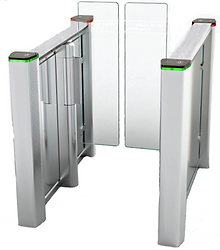


Why Choose Evolve Speed Gates.
Evolve Paddle Gates (PG) are engineered to provide the perfect balance of security, speed, and sophisticated design. Their slim profile, tempered glass barriers, and intelligent detection technology create a safe and welcoming entrance for employees, visitors, and contractors.
Benefits :-
-
Modern architectural design.
-
Fast and smooth pedestrian flow.
-
Prevents unauthorised entry.
-
Contactless access options.
-
Intelligent safety sensors.
-
Quiet, reliable operation.
-
Low maintenance.
-
Built for continuous operation.
Safety Comes First Intelligent Detection Technology.
Every Evolve Paddle Gate includes advanced safety features designed to protect users while maintaining efficient pedestrian flow.
Features :-
-
Anti-tailgating detection.
-
Anti-passback support.
-
Infrared safety sensors.
-
Obstacle detection.
-
Automatic reopening upon obstruction.
-
Emergency fail-safe opening.
-
Fire alarm integration.
-
Adjustable opening and closing speeds.
.jpg)

Compatible with Your Existing Security System.
Evolve Paddle Gates integrate seamlessly with today's leading access control technologies.
Supported Credentials :
-
RFID Cards.
-
Mobile Credentials.
-
QR Codes.
-
Barcode Readers.
-
Facial Recognition.
-
Fingerprint Readers.
-
PIN Keypads.
-
Visitor Management Systems.
Why Evolve - More Than Just a Speed Gate.
Choosing Evolve means partnering with experienced access control specialists committed to delivering complete entrance security solutions.
Our Services :-
-
Professional consultation.
-
Site assessment.
-
Custom system design.
-
Installation.
-
System commissioning.
-
Preventive maintenance.
-
Technical support.
-
Warranty coverage.


Premium Design - Built to Complement Modern Architecture.
With elegant stainless steel finishes, slim cabinets, and transparent tempered glass paddles, Evolve Paddle Gates blend naturally into premium commercial environments while maintaining a high level of security.
Technical Highlights / Engineered for Performance :
-
High-speed operation.
-
PMMA or tempered safety glass arms.
-
Heavy-duty brushless motors.
-
Stainless steel housing.
-
Indoor and outdoor models.
-
Bidirectional operation.
-
Low noise operation.
-
LED status indicators.
-
Optional wider DDA or ADA lanes.
-
Long service life.
Secure Access Without Compromising Pedestrian Access Control.
-
Commercial Office Buildings.
-
Building / Construction Sites.
-
Manufacturing Facilities.
-
Warehouses and Logistics Hubs.
-
Education, Acadamies, Schools and Universities.
-
Well-being, Leisure Centres and Gyms.
-
Stadiums and Event Venues.
-
Government and Public Sector Facilities.
-
Healthcare Environments.
-
Airports and Transport Hubs.
We provide complete access control integration, installation support, and technical guidance across the UK.

Find Out More
Speed gates fulfil the same role as other pedestrian entrance control systems within a building, helping to make movement throughout the facility smoother, safer, and more organised. However, there are some important differences between speed gates and other entrance control solutions.
To understand these differences, it is helpful to first explain exactly what a speed gate is.
What are speed gates?
Speed gates are a medium-security pedestrian entrance control solution, typically designed at waist height, that provide fast and controlled access to buildings and secure areas.
They generally consist of three key components: the gate cabinet, the barrier arms, and an integrated access control system.
Depending on the model, the barrier arms can operate in different ways. Some speed gates use swing-arm mechanisms, where the arms swing open and close to permit passage, while others feature retractable arms that slide into the cabinet to create a clear passageway.
Most models incorporate advanced sensors to detect unauthorised entry attempts, tailgating, wrong-way passage, and other abnormal movements, helping to enhance security and control pedestrian flow.
There are several types of speed gate available, each designed to provide secure and efficient pedestrian access while meeting different security, throughput, accessibility, and architectural requirements. The primary distinction between speed gates is the way the barrier operates.
Paddle Gates - Paddel gates are among the most common types of speed gate. As the name suggests, they use barrier arms that swing open and closed automatically once access has been authorised.
Retractable Gates - Retractable gates, sometimes referred to as slide lanes, or flap barriers use barrier arms that retract into the gate cabinet when access is granted.
Speed Lanes - Speed lanes are the same as paddel gates, they use barrier arms that swing open and closed automatically once access has been authorised.
Choosing the right speed gate?
The most suitable speed gate will depend on several factors, including:
-
Security requirements.
-
Expected pedestrian throughput.
-
Accessibility needs.
-
Available installation space.
-
Architectural design objectives.
-
Integration with access control systems.
By selecting the appropriate speed gate solution, organisations can achieve the right balance between security, safety, accessibility, and aesthetics.
While speed gates are designed to prevent unauthorised access and deter tailgating, they are equally focused on user safety. By combining intelligent sensors, obstacle detection, emergency operation modes, and controlled barrier movement, speed gates provide a secure, efficient, and safe entrance control solution for modern buildings.
Modern speed gates incorporate a range of safety features to protect pedestrians, prevent accidents, and comply with relevant safety standards.
-
Obstacle Detection - Most speed gates use infrared sensors to monitor the passage lane.
-
Anti-Collision Protection - The barrier arms are designed to react safely if an obstruction is detected during operation.
-
Safety Sensors - Multiple sensors continuously monitor movement through the lane, helping to ensure that the gate only closes when it is safe to do so.
-
Emergency Egress - In the event of a fire alarm, power failure, or emergency evacuation, speed gates can be configured to automatically open and remain open, allowing occupants to exit quickly and safely.
-
Fail-Safe Operation - Many speed gates incorporate a fail-safe mode that automatically releases or opens the barriers when power is lost.
-
Visual and Audible Indicators - LED indicators, status lights, and audible alerts help guide users through the lane and provide clear feedback on whether access has been granted or denied.
-
Compliance with Safety Standards - Speed gates must be designed and tested to comply with relevant safety and accessibility standards.
-
Fast and efficient pedestrian throughput
-
Modern and aesthetically pleasing appearance
-
Effective deterrent against unauthorised access
-
Tailgating and wrong-way detection capabilities
-
Seamless integration with access control systems
-
Suitable for corporate offices, headquarters, education facilities, airports, and public buildings
-
Available in a range of configurations to suit different security and architectural requirements
Things to consider before buying?
Before requesting quotations, consider:
-
Number of users per day.
-
Required security level.
-
Accessibility requirements.
-
Available installation space.
-
Indoor or outdoor installation.
-
Access control system compatibility.
-
Budget.
Typical price range?
The cost can vary significantly depending on the specification:
-
Basic speed gate lanes: several thousand pounds per lane.
-
Premium glass speed gates: higher-end pricing.
-
High-security speed gates with advanced sensors and integration: significantly more.
Installation, access control equipment, and commissioning are usually additional costs.
Different terms for speed gates?
Different manufacturers and regions use different terms for speed gates. Here are the most common names::-
-
Turnstile, Speed Turnstile, Speed Gate Turnstile, Optical Turnstiles.
-
Speed Gate, Security Speed Gates.
-
Entrance Gate, Security Gate, Office Speed Gates, Access Control Gates.
-
Access Control Gate, Self-boarding Gate.
-
Speedstyle, Slim Gates, Full height speed gate.
-
Fast Gates. Underground Gates.
-
Paddle Gates, Optical Speed Gates, Swing Barrier Gates
-
Pedestrian Access Gates, Glass Paddle Gates.
-
Security Entrance Gates, Intelligent Speed Gates.
-
Automated Entrance Gates, Commercial Speed Gates, Corporate Access Control Gates.